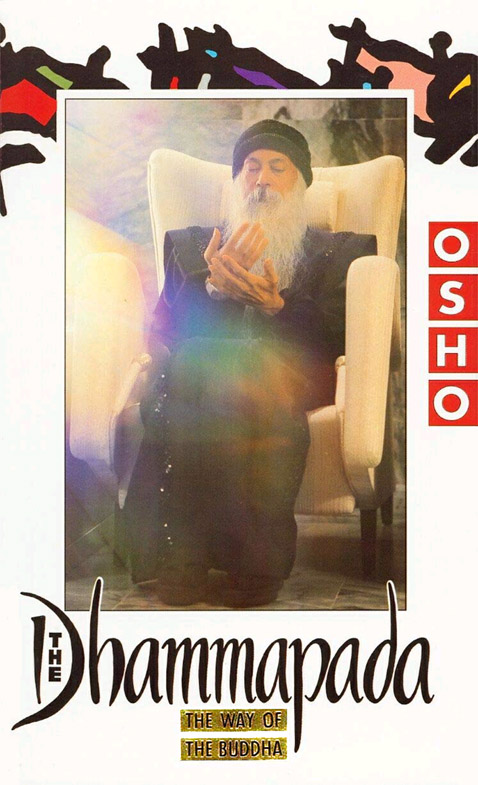
The Dhammapada: The Way of the Buddha, Vol 10
Discourses
Table of Contents
Beyond happiness is bliss
Beyond happiness is bliss. Happiness is caused; bliss is causeless. Beyond happiness is bliss: the Dhammapada points beyond happiness—to bliss. Happiness depends on circumstances; bliss depends on nothing. Happiness comes and goes; bliss stays. The Buddha's teaching: don't settle for happiness—seek bliss.
Whatsoever happens is good
Whatsoever happens is good. The sage sees good in everything. Whatsoever happens is good: the awakened one doesn't divide events into good and bad. Everything is grist for the mill of awareness. Even suffering is good—it awakens. The Dhammapada: when consciousness is right, everything is right.
Meditation requires courage
Meditation requires courage. Meditation is not for the faint-hearted. Meditation requires courage: to face your inner darkness, your fears, your void—takes courage. The coward escapes into the world; the brave enter within. The Dhammapada: meditation is the ultimate act of bravery.
Transcendence -- the true therapy
Transcendence—the true therapy. Not therapy of the mind but of the being. Transcendence—the true therapy: Western therapy works on the mind; Buddhist therapy transcends it. You don't fix the mind—you go beyond it. The Dhammapada: the only real cure for suffering is transcendence.
The Buddha is your birthright
The Buddha is your birthright. Not a distant ideal—your own nature. The Buddha is your birthright: enlightenment is not earned—it's claimed. You were born with Buddha nature. The Dhammapada doesn't say 'become'—it says 'recognize.' The Buddha is not above you—within you.
Life transcends logic
Life transcends logic. Life is bigger than any logic. Life transcends logic: the mind wants life to be logical—it isn't. The Dhammapada points to the illogical: the first shall be last, the meek shall inherit, giving is receiving. Don't try to understand logically—live existentially.
The fool is his own enemy
The fool is his own enemy. The ignorant person harms himself. The fool is his own enemy: the Dhammapada's blunt truth—the fool doesn't need enemies; he is his own. His ignorance, his desires, his attachments—these destroy him. The wise person is his own friend. Choose: be friend or foe to yourself.
Not gospels but gossips
Not gospels but gossips. Most religious teachings are gossip, not gospel. Not gospels but gossips: the Dhammapada cuts through religious chatter. Most of what passes for religion is gossip about God. The Buddha speaks from experience—not hearsay. Don't listen to gossip—taste the gospel yourself.
Delight in meditation
Delight in meditation. Meditation is not dry—it's delightful. Delight in meditation: the Dhammapada portrays meditation as joy, not duty. The meditator who doesn't delight is not meditating—he's struggling. True meditation is the highest pleasure. The Buddha: delight in meditation, day and night.
Love is its own reward
Love is its own reward. Love doesn't need a return—it IS the return. Love is its own reward: the Dhammapada on love that doesn't calculate. The lover doesn't ask 'what do I get?'—loving IS getting. Love that seeks reward is commerce, not love. The Buddha's love: give and the giving is enough.
All is not lost, but time is running short
All is not lost, but time is running short. The urgency of the spiritual path. All is not lost, but time is running short: the Dhammapada's urgency—not fear but awareness of impermanence. You still have time—but don't waste it. The deathless can be found, but only if you seek now. Don't postpone.
A new man with a new vision
A new man with a new vision. The Dhammapada as blueprint for new humanity. A new man with a new vision: the Buddha was the first new man—aware, whole, free. The Dhammapada is his vision for a new humanity—not followers but individuals, each a Buddha. The new vision: meditation, not prayer; awareness, not belief.
Religion is a song, poetry, a dance of your heart
Religion is a song, poetry, a dance of your heart. The Dhammapada's finale—religion as celebration. Religion is a song, poetry, a dance of your heart: not the solemn religion of priests but the celebrating religion of the Buddha. The Dhammapada ends not with rules but with music. Religion is not a duty—it's a dance. Sing, dance, celebrate—this is the Buddha's way.