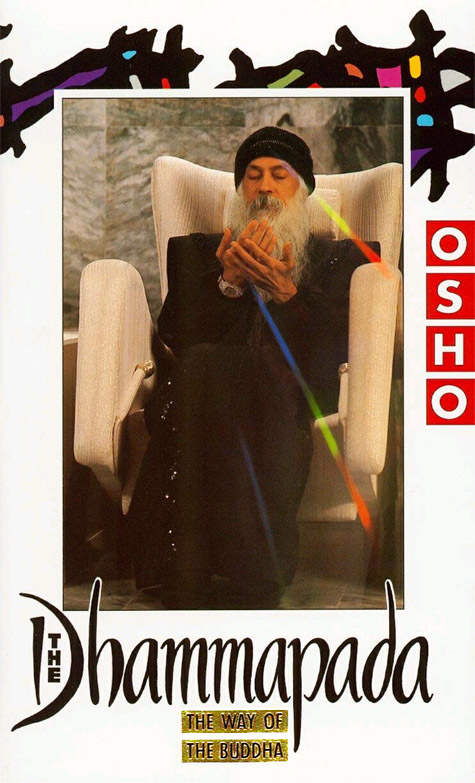
The Dhammapada: The Way of the Buddha, Vol 6
Discourses
Table of Contents
The security of insecurity
The security of insecurity. 'He is awake. The victory is his. How can he lose the way who is beyond the way?' The security of insecurity: the awakened one finds safety in not seeking safety. The mind wants security; existence offers change. When you accept insecurity as your nature, you become secure—because nothing can be taken from you.
Many are called; few are chosen
Many are called; few are chosen. 'Sometimes I'm joyful with people, other times I only want to be alone. Am I escaping?' Don't judge. Both aloneness and togetherness have their time. Many are called; few are chosen: the path is open to all, but only those who are total are chosen. Don't alternate out of fear—let each state be complete.
A slave in your own house
A slave in your own house. 'Master yourself according to the law. The rain could turn to gold and still your thirst would not be slaked.' Desire is unquenchable. A slave in your own house: the mind is the master, you are the slave. Desires rule you. Master yourself—not by suppressing desires but by understanding them. The house is yours—take it back.
This too will pass
This too will pass. 'Is political action the only means to fight injustice?' No. Political action changes the surface; meditation changes the root. This too will pass: everything is impermanent—both misery and power. The political mind seeks to change the world; the religious mind seeks to change itself. When the individual transforms, the world transforms.
Live in joy
Live in joy. 'Live in joy, in love, even among those who hate. Live in joy, in health, even among the afflicted.' Live in joy: not dependent on circumstances but arising from within. The Buddha's joy is not pleasure—it's the bliss of awareness. Even among the hateful, the sick, the afflicted—the awakened one lives in joy.
No going back
No going back. 'Unimagined ecstasy, unimagined pain.' Both are part of the journey. No going back: once you step on the path, there's no return. The pain is the old leaving; the ecstasy is the new arriving. Don't cling to either—both pass. The one who walks on is beyond both.
Forgetfulness, the only sin
Forgetfulness, the only sin. 'Do not let pleasure distract you from meditation. Like nothing lest you lose it.' Forgetfulness, the only sin: not murder, not theft—but forgetfulness of your true nature. All sins arise from forgetfulness. Remember: awareness is the only virtue. Everything else follows from remembering.
Everything is possible
Everything is possible. 'Does the Buddha weep?' The Buddha doesn't weep—he laughs. Jesus wept because he was still attached to the world. The Buddha has transcended all attachment. Everything is possible: when you're awakened, tears and laughter are both available—but the Buddha chooses laughter. Compassion without tears is the highest compassion.
Mind is a fraud
Mind is a fraud. 'Let go of anger, let go of pride. Anger is like a chariot careering wildly. He who curbs his anger is the true charioteer.' Mind is a fraud: it promises happiness and delivers misery. It promises love and delivers jealousy. Don't trust the mind—watch it. The true charioteer doesn't whip the horses—he understands them.
Happiness: the death of the ego
Happiness: the death of the ego. 'Why does misery feel so safe and happiness so threatening?' Because the ego is built on misery. Happiness dissolves the ego—so the ego fears happiness. Happiness: the death of the ego. Misery is the ego's food; happiness is its poison. When the ego dies, happiness remains—eternal, causeless.