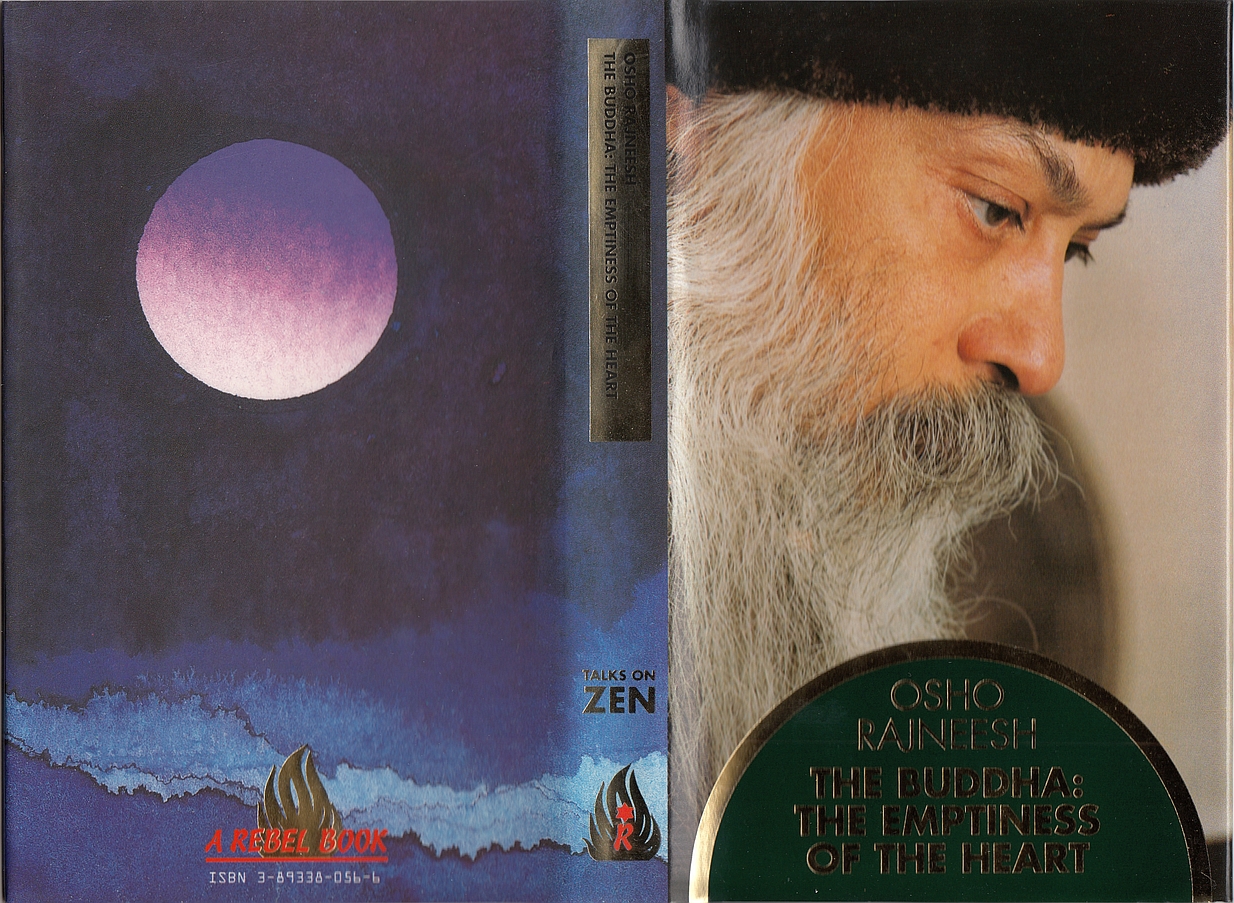
The Buddha: The Emptiness of the Heart
Discourses
Table of Contents
The emptiness of the heart
The emptiness of the heart. Bukko: Take things easily, without forcing. The rush of thought subsides naturally; the true face shows itself. The emptiness of the sea allows waves; the emptiness of the mountain valley makes echoes; the emptiness of the heart makes the Buddha. To be a buddha is the easiest thing—it's already breathing in you. Don't take anything seriously. Existence is easy; you don't earn your breath. The emptiness of the heart is not blankness—it's the space where the Buddha appears.
Twenty-four hours a day
Twenty-four hours a day. Daikaku: Zen practice is not clarifying conceptual distinctions but throwing away preconceived views and piercing through to the spring of self. Turn within twenty-four hours, in every situation. Don't cling to quiet places or shun disturbance. All religions have served politicians—the pope blessed Mussolini, the archbishop prayed for England, Hitler was blessed by both Catholic and Protestant churches. Religion is a servant of the state. Zen is the only exception.
This knowing is a transformation
This knowing is a transformation. Bankei: If you try to stop arising thoughts, the stopping mind and stopped mind become split—no peace. Wiping out thoughts is like washing blood with blood. Thoughts are temporary appearances—let them start and stop without grasping or rejecting. The enlightened no-mind is brighter than a mirror—thoughts dissolve without a trace. Buddha marks a milestone: before him, society could never be the same. This knowing is a transformation—not intellectual but existential.
Enter the door of anatta
Enter the door of anatta. Rinzai: From the moment you ask the question, there is already a difference. Not a thing has self-nature. The Buddha is an illusory phantom; the patriarchs are old monks. If you seek the Buddha, you'll be caught by the Buddha demon. Whatever you seek becomes suffering. Buddha goes beyond the self—no-self, anatta, is your true existence. When you are not, you are—spread all over the cosmos. Enter the door of anatta: emptiness is not nothingness but universality.
In the blink of an eye
In the blink of an eye. Daio: Don't worry about old calendar days—go by the living road you see on your own. Like a hawk sailing through the skies, in the blink of an eye you cross over. The one great concern is not apart from daily affairs. Everything in the last myriad eons is right in the present. Two ways to know yourself: knowledge (borrowed, cheap, crippling) or direct experience (dropping all knowledge). Better to be ignorant and innocent than knowledgeable. In the blink of an eye—sudden enlightenment.
To take up a koan
To take up a koan. Bukko: A koan is a deep saying of a patriarch. Three koans: 'The true face before father and mother were born,' 'The heart, the Buddha,' 'No heart, no Buddha.' If after three to five years there is no satori, drop the koan—it can become an invisible chain. Even traditional methods can become medicine that poisons. Sometimes quickly, sometimes slowly; sometimes hot on the trail, sometimes resting. When the koan is dropped, in due time they hit on their own true nature. Sleep when it's time to sleep—Zen is not doing Zen.
From the surface to the center
From the surface to the center. Shoitsu: Not falling into seeing and hearing, not following sound or form. The whole world is the gate of liberation. Don't think of getting rid of anything. One atom contains the cosmos; one thought pervades everywhere. The whole point of Zen: the present moment contains everything—past, present, future. Existentialism says life is anguish; Zen says life is celebration. From the surface to the center: your anxieties are real only if you don't know your life source.
The man of enlightened freedom
The man of enlightened freedom. Engo: The enlightened man enjoys perfect freedom in active life—like a dragon in deep waters, a tiger in its mountain. The unenlightened drifts—like a ram caught in a fence. The enlightened man's words are like a crouched lion, like a diamond sword. When friend meets friend, they encourage each other. The way of the absolute has no fixed rules. A blade of grass can stand for the golden Buddha; the golden Buddha can stand for a blade of grass. Truth is manifest everywhere.