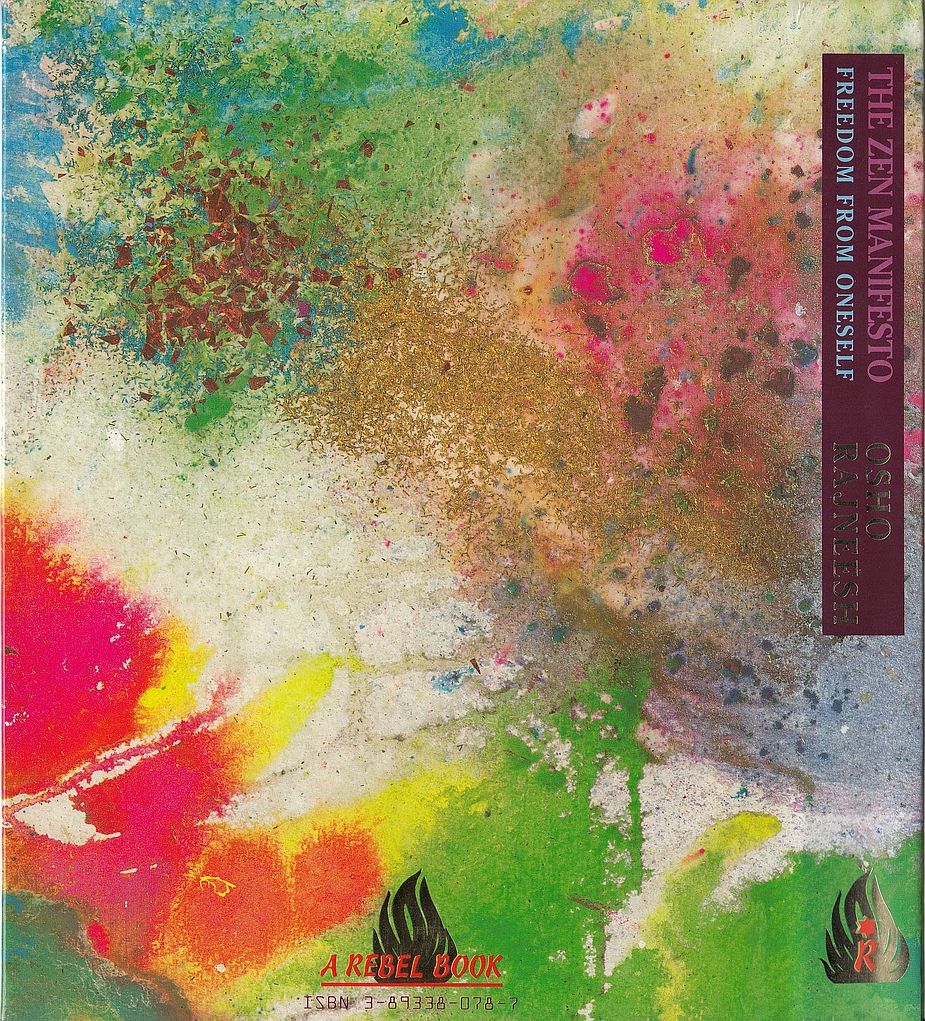
The Zen Manifesto: Freedom From Oneself
Discourses
Table of Contents
This disappearance is anatta
This disappearance is anatta. Tanka burned the Buddha statue for warmth. 'When it is cold, we gather around the hearth by the fire. When it is hot, we sit in a bamboo forest.' This disappearance is anatta: no-self. The statue is wood—burn it if you're cold. The Buddha is not in the statue. Anatta is the freedom from self—your self is as empty as the statue. Burn it and get warm.
Let the christian ship drown
Let the christian ship drown. Religion as a ship that must sink. Let the Christian ship drown: organized religion is a sinking ship—don't cling to it. Christianity, Hinduism, Buddhism—all ships that were useful once but are now prisons. Let them drown. Swim on your own. The manifesto: freedom from all religions, including Zen.
To wait, to wait for nothing
To wait, to wait for nothing. The Zen way of waiting—not for something but for nothing. To wait, to wait for nothing: the sage waits—but not for anything. Waiting itself is the state. The mind waits for results; the sage waits in emptiness. This waiting is not passive—it's the most alive state. Waiting for nothing, everything arrives.
Freedom not licentiousness
Freedom not licentiousness. Zen freedom is not license—it's responsibility. Freedom not licentiousness: the Zen manifesto proclaims freedom—not from morality but from imposed morality. True freedom is responsible—it comes from awareness, not from rebellion. The free person doesn't need rules because awareness IS the rule.
The sky of completion
The sky of completion. Hotetsu saw fish and motioned to them. Tanka said, 'Tennen.' The sky of completion: when everything is complete, nothing needs to be done. The sky doesn't add or remove clouds—it's complete with or without them. The sage is complete—nothing missing, nothing extra. This is the sky of completion.
Chaos -- the very nature of existence
Chaos—the very nature of existence. Existence is chaos—not order. Chaos—the very nature of existence: the mind wants order; existence is chaos. Not disorder but super-order—so complex it looks chaotic. The sage embraces chaos—he doesn't try to control it. In chaos, the deepest order is hidden. The manifesto: don't fight chaos—be it.
Mind only thinks, meditation lives
Mind only thinks, meditation lives. The difference between mind and meditation. Mind only thinks, meditation lives: the mind is a thinking machine—it can't live, only think. Meditation is living without thinking. The mind produces shadows; meditation enters reality. Don't think about life—live it. The manifesto: from thinking to living.
Inscape -- the ultimate annihilation
Inscape—the ultimate annihilation. Going within until even the within dissolves. Inscape—the ultimate annihilation: not landscape but inscape—the inner geography. Go so deep within that the within itself dissolves. The ultimate annihilation is not death—it's the death of separation. The inscape reveals: there's no inside and outside. One vast sky.
Small intervals of light
Small intervals of light. Between thoughts, there are gaps—small intervals of light. Small intervals of light: between two thoughts, there's a gap—a small interval of light. These gaps are satori in miniature. The Zen manifesto: don't try to stop thoughts—just notice the gaps. The gaps grow. One day, the gap is permanent. Enlightenment.
The less you are, the more you are
The less you are, the more you are. Shrinking the ego until only the vast remains. The less you are, the more you are: the ego is a small thing masquerading as everything. Shrink it—and the vast expands. When you're nothing, you're everything. The paradox of Zen: less is more. The manifesto: decrease until you increase.
Sammasati -- the last word
Sammasati—the last word. Right remembrance—the last teaching of the Buddha. Sammasati—the last word: right awareness, right remembrance. The Buddha's last word before dying. Remember yourself—always, everywhere. Not as the ego but as pure awareness. Sammasati is the manifesto's culmination: remember, remember, remember—until remembrance becomes you.